
IoT solar street lights can be remotely controlled, upload data and give fault warning. The basic function is that the network transmission is performed using the built-in wireless communication modules. The three primary communication solutions available in the market are 4G/5G, LoRa and NB-IoT, and they are each amenable to different engineering scenarios. Let’s follow smart street light factory TIANXIANG.
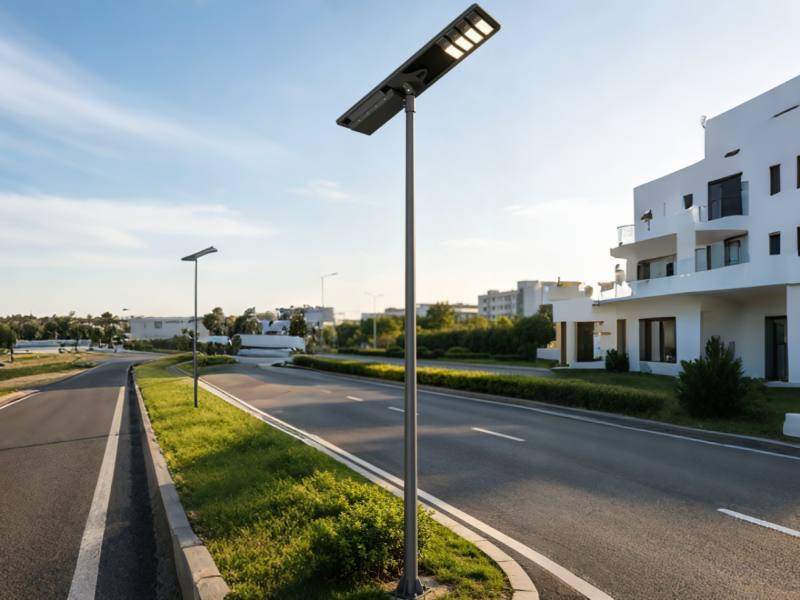
NB-IoT is the most popular network for rural roads and village lighting. It is the operator’s cellular narrowband IoT, directly embedded in the smart controller of the street light, and uses mobile, Unicom and Telecom base station signals to transmit data. The advantages are: extremely low power consumption, compatible with the photovoltaic energy storage power supply mode of solar streetlights, and minimal battery consumption; wide signal coverage, ensuring stable connection even in remote mountain villages and field roads; low cost per data transmission, suitable for unified management of large numbers of streetlights. It primarily aims at low cost municipal infrastructure smart lighting.
It is mainly used for integrated smart street lights in the main roads of cities, parks and scenic spots. They offer high communication speeds and a strong functional expandability, being capable of transmitting camera footage, environmental monitoring data and broadcast audio along with lighting data simultaneously. But they need bigger capacity lithium batteries and photovoltaic panels which mean a higher initial equipment procurement cost. The dense urban base stations can cover the stable and continuous signals, which is suitable for the integrated smart street light projects with multi-functional devices.
LoRa wireless private networks are widely used in enclosed parks, factories and large cultural and tourism scenic areas. They do not depend on carrier base stations. LoRa gateways are installed in the field, and all street lights in the area communicate through a self-organized local area network via LoRa modules. The gateway aggregates the data and sends it to the cloud platform. The mobile phone signal is not limited in strength and can be used in remote mountainous areas or factory areas where there is no carrier signal. There are no long-term data charges. Large-scale rural roads may require multiple gateways.
The whole network link includes three layers: the first layer is the communication module of the street light terminal, which collects operating data from the battery, light source and photovoltaic panel; the second layer is the signal transmission network, which transmits data through the above three communication methods; the third layer is the cloud-based smart management platform, engineers and maintenance personnel can remotely view the status through computers and mobile phones, issue dimming and timed on/off commands, and receive automatic push notifications for damage or power depletion faults.
Smart street light Factory TIANXIANG believes that the three networking solutions are not absolutely superior or inferior. The selection of the project depends on the signal strength on site, budget and other functions. NB-IoT is the best option for basic lighting in rural areas, 4G is selected for multi-functional smart street lights in cities, and LoRa private networks are built for closed factory areas without public networks. Together they are the networking foundation of IoT solar street lights.
Post time: Jun-18-2026


