
Ordinary LED streetlights can only meet the basic needs of night lighting, while smart street lights are intelligent devices that use LED light sources as carriers and integrate sensing, communication, and cloud management. The difference is not in the light-emitting element but in the three basic dimensions of control logic, management mode, and functional expansion. Let’s follow solar street light manufacturer TIANXIANG to learn more.
Ordinary LED streetlights have a simple structure, consisting of a lamp head, driver, and timer switch, with a fixed and singular control method. Most depend on timed switching to turn on and off uniformly, while those with light sensors can only turn on and off according to the ambient light level and cannot adjust brightness. The streetlights are all on the same timer, so the whole road is lit up at the same time. They use the same amount of electricity even if there is no traffic and no sunlight. This is a huge waste of energy. Maintenance is entirely dependent on manual inspections. No proactive reporting of damage to streetlights, wiring leaks, or driver failures is possible. Staff have to check each street individually, leading to delayed fault detection and high manpower and time costs for maintenance. They can only perform simple street lighting functions and do not have the ability to be expanded with additional functionality.
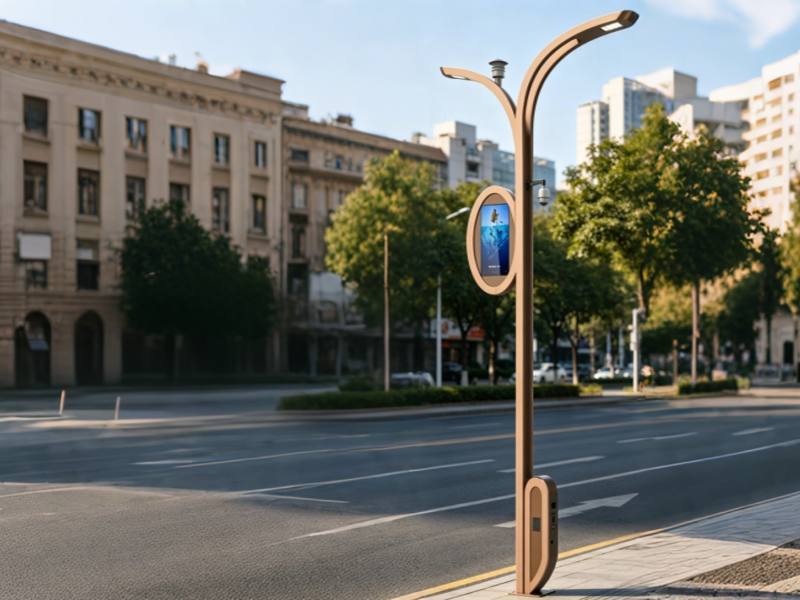
On the other hand, the smart street lights are equipped with an intelligent controller, communication module, and other sensors besides LEDs, thus realizing the whole closed loop of “terminal-gateway-cloud platform.” The communication is done with low-power technologies like NB-IoT and LoRa. Each streetlight is connected to the network individually. Administrators can control the brightness of each light individually from the backend. The system supports dimming based on time and dimming based on pedestrian/vehicle sensors. It automatically dims down at night when there is less foot traffic and vehicle traffic, and instantly returns to full brightness as vehicles approach. Energy savings are more than 50% over ordinary LED streetlights. Sensors for light and rain constantly monitor the surroundings, turning on early in the morning when it is cloudy or raining and automatically turning off at dawn, adjusting to the changing weather conditions.
The main difference is the mode of operation and maintenance. Regular LED streetlights are controlled passively, and faults can only be detected manually. Smart street lights have an active early warning system. Abnormal voltage, short circuits, and damaged light sources are reported in real-time and uploaded to the cloud. The system can automatically generate maintenance work orders, accurately locate the fault point, avoid full-line inspections, and greatly reduce maintenance costs.
The functional differences matter as well. Smart street lights are integrated with temperature, humidity, noise, PM2.5 environmental monitoring, video surveillance, information dissemination, and charging stations, whereas ordinary LEDs only provide illumination. They collect urban environmental data as the sensing endpoints of a smart city. This data, once collected on a platform, can support traffic management and environmental governance.
TIANXIANG, a solar street light manufacturer, holds that ordinary LED streetlights are single-function lighting hardware that satisfies the basic demand of “seeing the road”. On the contrary, the smart street lights are intelligent terminals integrating lighting, sensing, data transmission, and remote control, which can balance energy saving, low-cost operation and maintenance, and urban digitalization. They are also the essential hardware carrier to implement smart cities.
Post time: Jun-23-2026


