
I. Hardware has high initial maintenance costs
1. Slightly Higher Cost Of Components Of Multifunctional Module
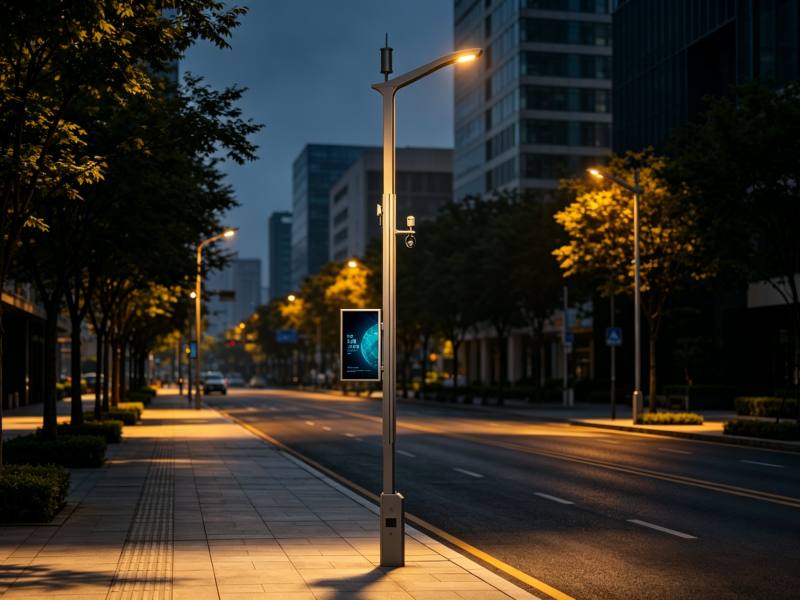
Unlike ordinary street lights, which require only the replacement of LED chips and drivers, smart roadway lights are equipped with sensors, 5G micro base stations, surveillance cameras, and other modules. These specialized parts are very precise but not very versatile and, therefore, the purchase price per piece is higher than traditional street lights. This results in a small increase in short-term hardware replacement costs.
2. Occasional Repair Costs For Waterproofing And Dustproofing Damage
Smart roadway lights consist of a large number of electronic components and are subjected to wind, rain, dust, and high temperatures for a long time. Occasionally, some minor faults like interface aging and module moisture damage occur, which require regular inspection and maintenance. These faults bring basic maintenance costs.
3. Slightly increased cost of specialized equipment testing
While traditional street light faults are easy to detect, smart roadway lights need special test equipment to troubleshoot problems with the signal, sensor, and control system. Maintenance in the beginning needs special tools, so the investment cost of the equipment is small.
II. Lower Long-Term Manual Inspection Costs
1. Automated Manual Street Light Inspection:
Traditional street lights require the manual inspection of each road, which is a long, cumbersome, and inefficient process. Smart roadway lights make it possible to remotely monitor and automatically set off alarms in case of malfunction, which means there is no need for routine inspection with all staff, saving a huge amount of manpower hours.
2. Precise Location Reduces Ineffective Maintenance:
The system can accurately determine the location and type of street light that is not working, enabling maintenance personnel to perform necessary on-site repairs. This will stop the blind trouble shooting, reduce the travel and the ineffective work, and largely save the labor cost.
3. Centralized Management Reduces Maintenance Staff:
By using a smart management platform, centralized management of streetlights in a region can be realized. A small number of maintenance personnel can handle a large area of equipment, thus effectively reducing municipal maintenance manpower expenses in the long run.
III. Continuous Energy Savings
1. Intelligent Dimming Reduces Power Consumption:
LED smart street lights support automatic dimming based on time of day, pedestrian traffic, and weather, eliminating the waste of full-power lighting all night. Compared to traditional street lights, the annual power saving rate per lamp can reach over 30%.
2. Power Outages Prevent Unnecessary Energy Consumption:
In case of line leakage or equipment malfunction, the system can automatically issue a warning and cut off the power supply, avoiding the continuous power consumption and severe line damage associated with traditional streetlights, thus reducing hidden electricity waste.
3. Long-Term Energy Savings Reduce Maintenance Costs:
Continuous energy savings can fully cover the slight increase in hardware maintenance costs. In the long run, energy conservation becomes the core advantage in reducing overall costs.
IV. More Cost-Effective Overall Maintenance:
1. Slight Short-Term Increase, Significant Long-Term Cost Reduction:
Intelligent light poles only have slightly higher initial hardware maintenance costs, but the two core costs of labor and energy consumption are significantly reduced. After 1-2 years of use, the overall maintenance cost is significantly lower than that of traditional streetlights.
2. Longer Equipment Lifespan Reduces Replacement Frequency:
Intelligent light poles have overvoltage and overheat protection functions, which means lower equipment wear and tear and a lifespan that is overall better than traditional streetlights, reducing the cost of frequent major repairs.
3. One-stop operation and maintenance reduces management costs.
The integrated intelligent operation and maintenance model simplifies management processes, reduces hidden costs including subsequent rectification, troubleshooting, and energy consumption control, and attains significantly higher overall cost-effectiveness compared to traditional street lights.
For many years, TIANXIANG has been deeply engaged in the intelligent light poles industry. We have self-produced, controllable components, support customized upgrades as needed, and provide mature remote operations and maintenance solutions, which greatly reduce customers’ subsequent maintenance expenses. The supply is stable, and the after-sales response is quick. If you need LED smart street lights, please get in touch with us.
Post time: Jul-01-2026


