
The rational application of smart streetlamps not only presents a variety of functional effects, but also meets the lighting needs of different environments, giving urban quantitative engineering construction a better advantage. Therefore, it can have a good effect on building smart cities, and the full-scale promotion of smart streetlamps is a good start to building smart cities.
Smart streetlamps are now commonplace. They have been used all over the world and installed in a variety of locations due to their energy efficiency, environmental friendliness, advanced technology, and other multifunctionality. So, how do smart streetlamps get made? An explanation will be given by smart streetlight manufacturer TIANXIANG.
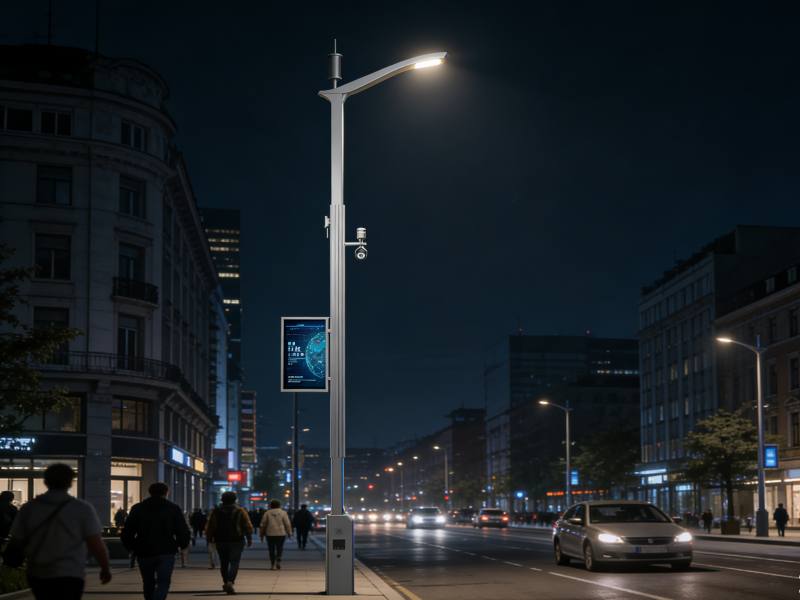
To create smart streetlamps, the first step is to determine their specifications. The specific situation is then taken into consideration when implementing industrial design. To improve user safety and experience, a number of factors, including safety, intelligence, and aesthetics, must be considered during the design process while adhering to aerodynamics and ergonomics. Casting and mold-making are completed following several iterations and improvements. To make sure that the design requirements are fulfilled, a prototype is usually constructed prior to mass production. The addition of LED displays, charging piles, cameras, smart streetlight controllers, and other components then satisfies the scenario requirements. The product is first tested in a test workshop. After the product has been disassembled and moved to the installation site and deemed satisfactory, various devices are installed. When technicians perform functional debugging, the entire manufacturing and installation process is completed.
How much time does it take to create intelligent streetlights?
Typically, production takes ten to twelve days. Twelve to fifteen days may be needed for more complicated designs and processes. To determine the exact production cycle, you must understand the unique features of the light fixture and calculate based on the specific conditions. Because they frequently incorporate a range of intelligent devices, such as displays, charging stations, security cameras, and voice announcements, smart streetlamps have a slightly longer production cycle than traditional streetlights.
A number of processes, including design, finalization, production, pole rolling, and welding, are involved in customizing smart streetlamps. Any delays in any process will affect the entire production cycle. The production cycle for light fixtures is usually unfixed. To guarantee on-time delivery, it’s best to give yourself 20 to 25 days, even if things change at any time.
Furthermore, because smart streetlamps are custom-built, their technical capabilities will have an impact on the production cycle. If at all possible, opt for large manufacturers. Stronger manufacturers can speed up the manufacturing process because they have enough human resources, advanced technical capabilities, cutting-edge production equipment, and extensive service systems.
TIANXIANG’s street light factory makes smart street lights. These lights include lighting, monitoring, WiFi, charging stations, and extra features like energy savings of more than 40%, automatic dimming with light sensors, and remote backend control. Pole heights and functional modules allow for customization of the light poles. They are wind-resistant up to level 12, made of Q235 steel, and IP65 waterproof and dustproof. Bulk purchases come with discounts, a 5-year warranty, and speedy delivery!
Post time: Dec-12-2025