
When choosing LED solar street lamps, the focus shouldn’t be on their price. Even the most expensive ones are still more economical than the electricity bills over a year or two. We should focus on the practical application of LED solar street lamps. Regardless, as outdoor lighting, they must maintain sufficient brightness to fulfill their intended purpose. TIANXIANG will discuss in detail how to improve the luminous efficiency and energy saving performance of LED solar street lamps from multiple perspectives.
The photovoltaic panel, the main component of a LED solar street lamp, has a direct impact on its luminous efficacy. Conventional silicon-based solar cells have a conversion efficiency of 15% to 20%. However, monocrystalline silicon and thin-film solar cells, two recent developments in photovoltaic technology, can greatly boost photoelectric conversion efficiency. Luminous efficiency can also be significantly increased by increasing the photovoltaic panel’s surface area or by maximizing sunlight capture with a light-tracing system.
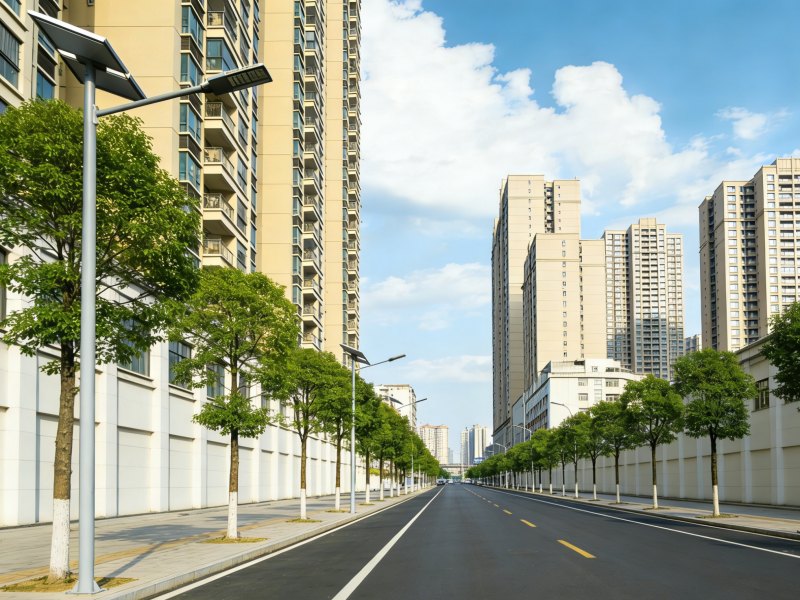
Using LED light sources is a crucial component in increasing LED solar street lamps’ luminous efficiency. When compared to traditional sodium and halogen lamps, LED lights have higher luminous efficacy and less energy loss when converting to visible light. Thus, using LED lights with high brightness and efficiency is essential when selecting LED solar street lamps. The choice of power supply for the drivers is also crucial. If a high-efficiency LED driver power supply is used, the LED lights will continue to have high luminous efficacy under a variety of operating conditions.
Intelligent light and time control design also guarantees the energy-saving performance of LED solar street lamps. By installing light and time control sensors, the streetlights can automatically turn off when there is sufficient natural light and automatically turn on at night or when there is insufficient light. The time control sensor can set the on and off times of the streetlights according to actual usage needs to achieve optimal power consumption. This intelligent control not only improves luminous efficacy but also further extends the lifespan of the solar cells, maximizing overall energy utilization.
To enhance the overall road lighting effect, LED solar street lamp design elements such as pole height, lamp illumination angle, and light spot layout should be carefully considered. By accurately determining the angle at which light propagates and the distance between lamps, solar energy can be efficiently utilized and light waste can be minimized. To increase the system’s energy efficiency, avoid frequent maintenance and replacements, and ensure stability during bad weather, sturdy wind-resistant materials should also be selected.
Lastly, for LED solar street lamps to function well over time, routine maintenance and inspection are also required. Regular cleaning of the solar panels and inspection of the batteries and LED lights can effectively prevent energy loss caused by dust and dirt. Maintaining the equipment in good working condition and regularly replacing aging and inefficient components can ensure that LED solar street lamps always maintain optimal luminous efficiency and energy-saving performance.
Through optimizing photovoltaic technology, LED lamps, intelligent control systems, improving battery performance, comprehensive design planning, and regular maintenance, LED solar street lamps can maximize energy savings while improving luminous efficiency. This not only provides a sustainable solution for urban lighting but also promotes the popularization and application of green energy.
Post time: Mar-10-2026