
The design of multi-functional smart light poles should adhere to three principles: structural design of the pole body, modularization of functions, and standardization of interfaces. The design, implementation, and acceptance of each system within the pole should comply with relevant standards and specifications, including pole design, mounting equipment, transmission methods, management platform, construction acceptance, maintenance, and lightning protection.
I. Layered Pole Layout
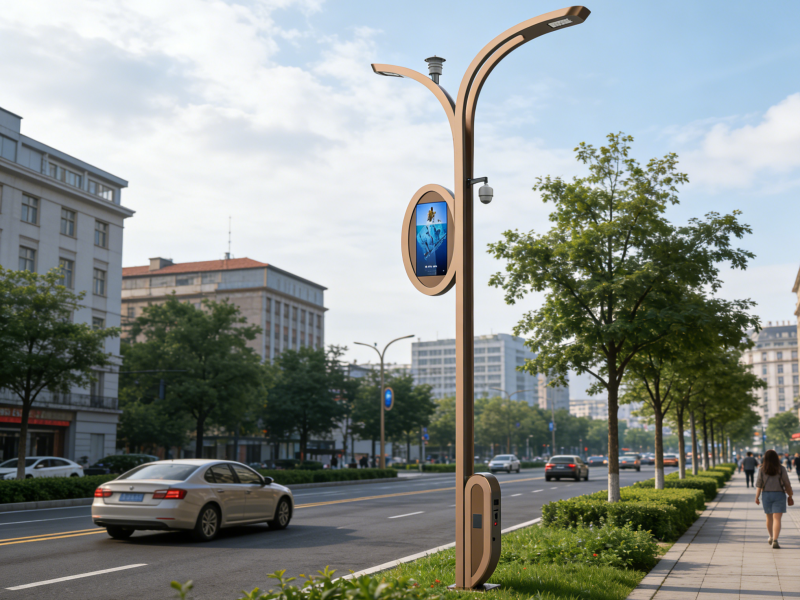
The functional layout of multi-functional smart light poles should ideally follow a layered design principle:
1. Bottom Layer: Suitable for supporting equipment (power supply, gateway, router, etc.), charging piles, multimedia interaction, one-button call, maintenance gates, etc. The suitable height is approximately 2.5m or less.
2. Middle Layer: Height approximately 2.5-5.5m, mainly suitable for road name signs, small signs, pedestrian traffic lights, cameras, public address systems, LED displays, etc.; Height approximately 5.5m-8m, suitable for vehicle traffic lights, traffic video surveillance, traffic signs, lane marking signs, small signs, public WLAN, etc.; Height above 8m, suitable for weather monitoring, environmental monitoring, smart lighting, IoT base stations, etc.
3. Top Layer: The top is best suited for deploying mobile communication equipment, generally with a height of 6m or more.
II. Component-Based Pole Design
Points to note in pole design:
1. Multi-functional smart light poles should be designed with good compatibility and scalability. Sufficient space should be reserved in terms of load-bearing capacity, equipment installation space, and wiring space, based on application scenarios and requirements.
2.Multi-functional smart light poles should adopt a component-based design, and the connection between equipment and the pole should be standardized. The pole design should ideally consider the independence of maintenance for different devices, and the internal design should meet the requirements for separation of strong and weak current cables.
3. The design service life of the pole should be determined based on factors such as importance and usage scenarios, but should not be less than 20 years.
4. The pole should be designed according to the ultimate limit state of load-bearing capacity and normal use limit state, and should meet the requirements for normal use of the equipment mounted on the pole.
5. The design style of all functional components of the pole should ideally be coordinated and unified.
6. To facilitate the standardization and normalization of base station installation interfaces, it is recommended to reserve a unified flange interface for the docking of base station units and the pole, and use a top-mounted enclosure to encapsulate the base station equipment to shield installation problems caused by different equipment. A typical top-mounted module should support one AAU (Automatic Anchor Unit) and three macro stations for fire monitoring.
TIANXIANG smart lighting poles offer numerous applications and financial savings by combining lighting, monitoring, 5G base stations, environmental monitoring, and other features. We have a sizable, privately owned production facility with several automated production lines that guarantee adequate production capacity. Factory-direct prices are available for bulk purchases, and delivery schedules are easily managed. From initial solution design and product customization to manufacturing and installation guidance, our skilled team offers full-process, one-stop service, offering thorough support and resolving any issues following collaboration.
Post time: Jan-13-2026