
First, let’s talk about “can it be installed”.
Simply welding or clamping a second arm to the hot-dip galvanized pole body is feasible on the surface. The edges of the octagonal conical pole provide a positioning plane, and clamping components can be purchased on the market. However, this only solves the problem of “being hung”, without addressing the issue of “being able to bear the load”.
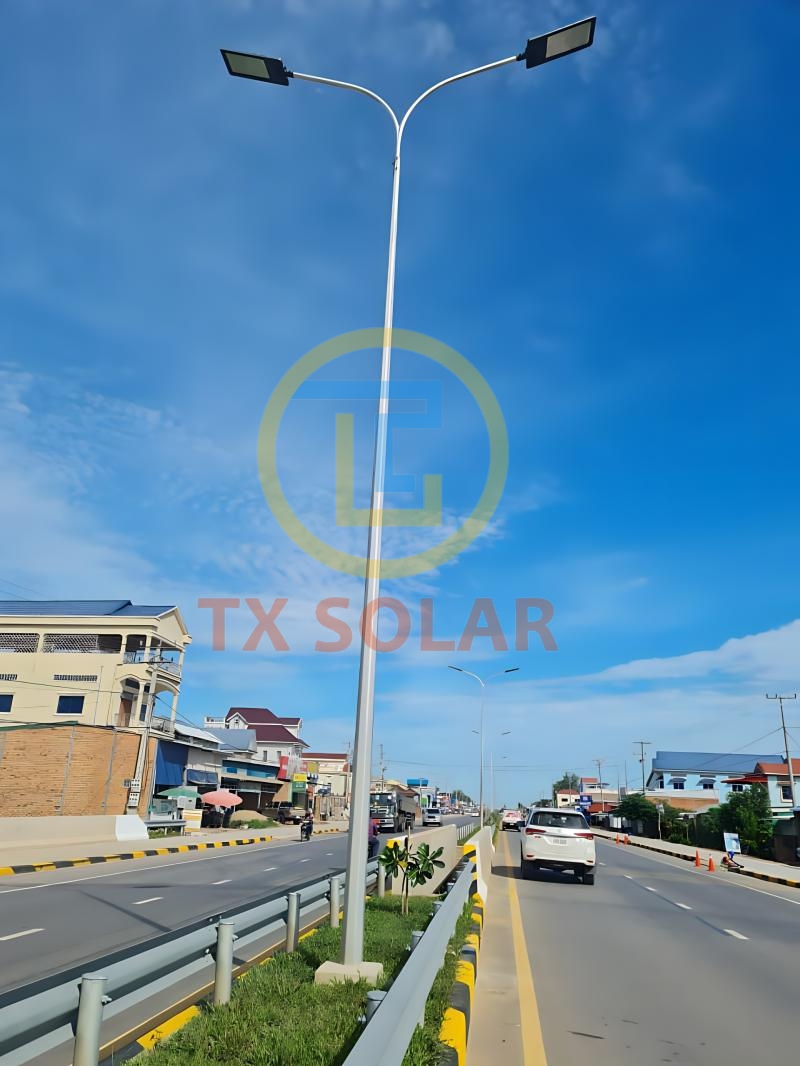
The core obstacle lies in structural bearing capacity.
When designing a single-arm pole, the bending section of the hot-dip galvanized pole body, the thickness of the flange plate, and the specifications of the foundation anchor bolts are all determined based on the load of a single-sided cantilever. After adding a second arm, the bending moment and torque borne by the pole body approximately double. If the original pole did not reserve sufficient margin in material selection – for example, the wall thickness was only 3.0mm instead of 4.0mm based on the single-arm load condition – after adding the arm, the stress of the pole body under strong winds will approach or even exceed the yield strength. Our factory’s hot-dip galvanized poles use Q235 steel, with a yield strength not lower than 235MPa, but the safety factor of the structural design is set according to the original load, and no hidden reserves for “possible future arm addition” are left.
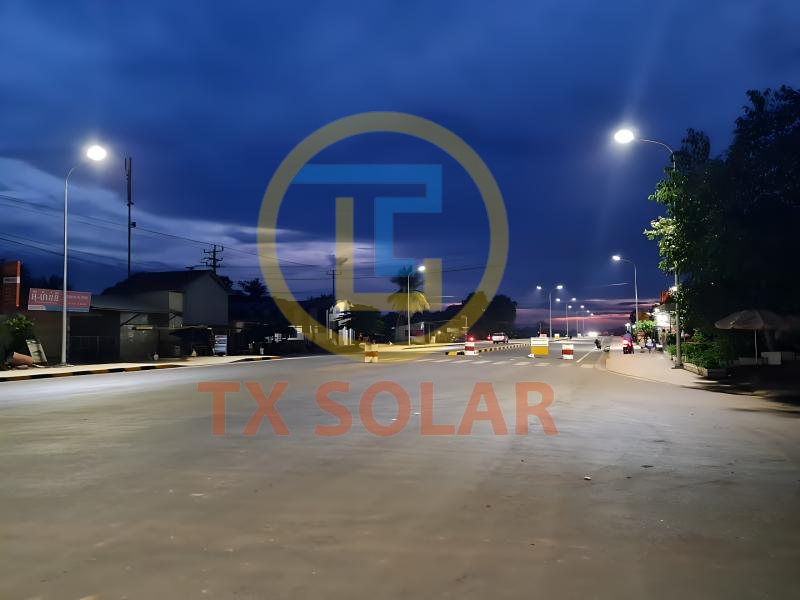
The foundation and flange connection are more challenging.
The concrete volume of the foundation and the spacing of the anchor bolts of the single-arm pole correspond to the overturning moment on one side. After adding a second arm, the overturning moment increases, and the original foundation may not meet the anti-overturning requirements. The cost of reworking the underground foundation is much higher than replacing a new pole. Regarding the flange plate, single-arm poles are usually only welded with the connecting plate for the cantilever arm at one side when leaving the factory. If a new one needs to be added on the other side, it is necessary to weld or drill holes on site. Once the hot-dip galvanized layer is damaged, the corrosion protection life of this part will drop sharply. Even if repainting is done, it is difficult to achieve the adhesion of the original factory’s galvanization.
Electrical wiring is also limited. The internal wiring channels and hand holes of the single-arm pole are designed based on a single-cable route, and adding a second arm means an additional set of lamp cable and possible independent control circuits. The original hand hole space may not be able to accommodate it, and forcibly expanding the hole will weaken the local strength of the pole body.
Practical suggestions for the purchaser:
If a project currently only installs one lamp but has an upgrade expectation in the future, the most economical approach is not to buy back and modify, but to require the hot-dip galvanized pole manufacturer to calculate the wall thickness and flange specifications of the hot-dip galvanized pole body based on the double-arm condition during the order placement, but only weld the connecting plate for the cantilever arm on one side, and reserve a standardized installation interface on the other side and do galvanization sealing treatment.
Post time: Nov-26-2026


