

1996
Tianxiang was established, focusing on traditional outdoor lighting pole fabrication and local municipal lighting contracts.
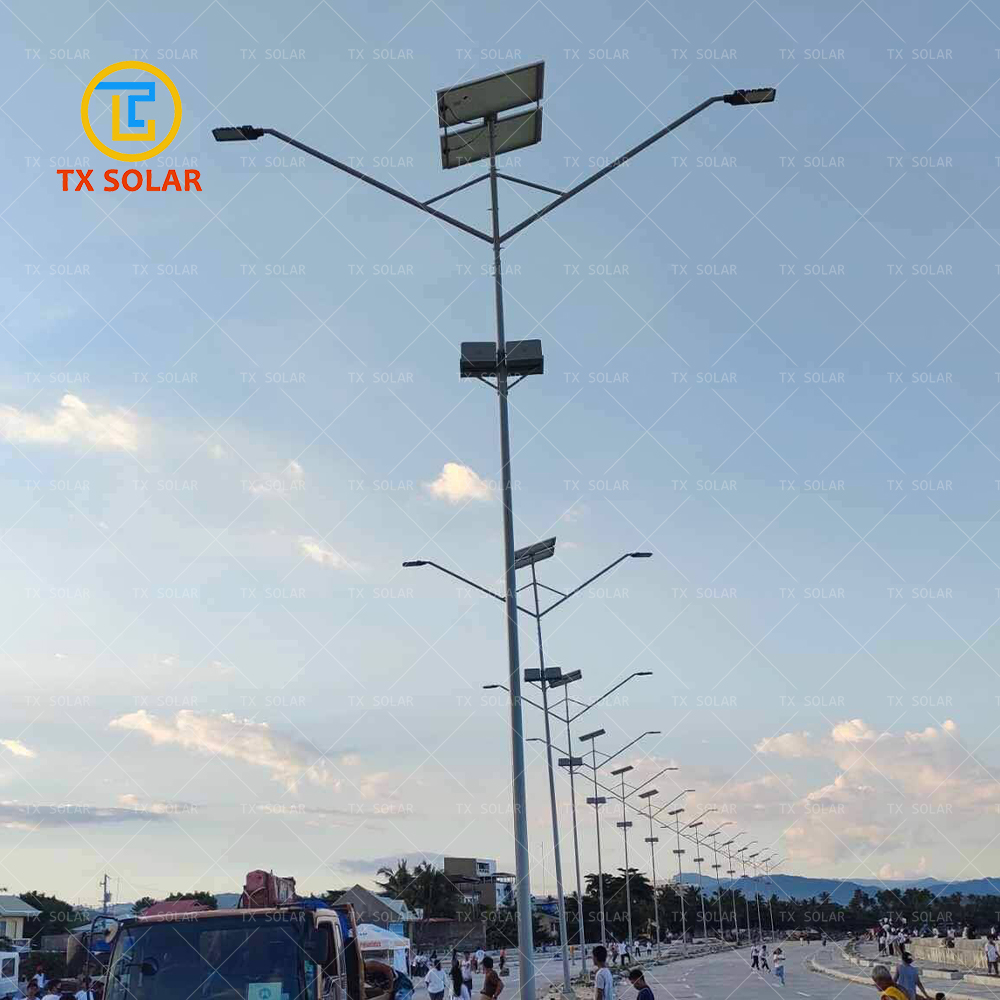
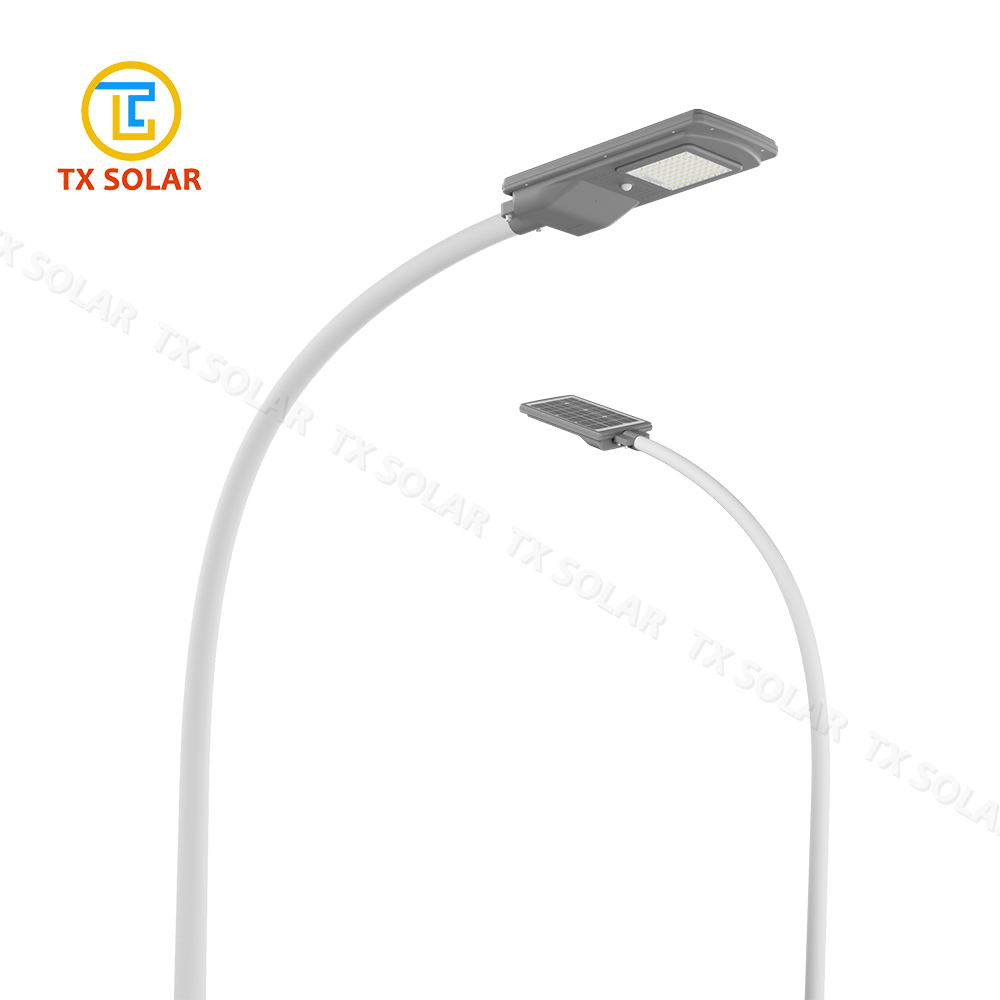
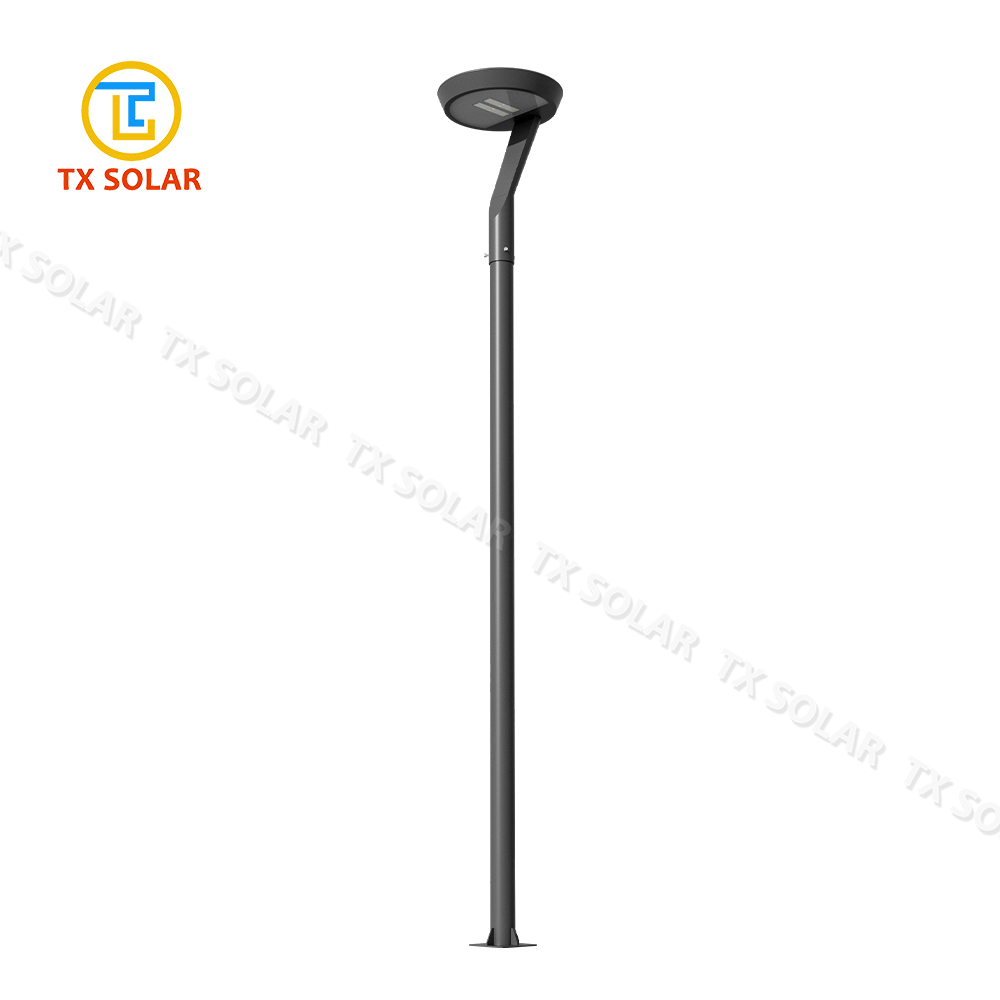
Our top-tier smart street lights and heavy-duty structural poles are engineered to provide reliable, zero-carbon illumination for expansive industrial complexes.
A global leader in smart outdoor lighting systems with decades of manufacturing excellence.
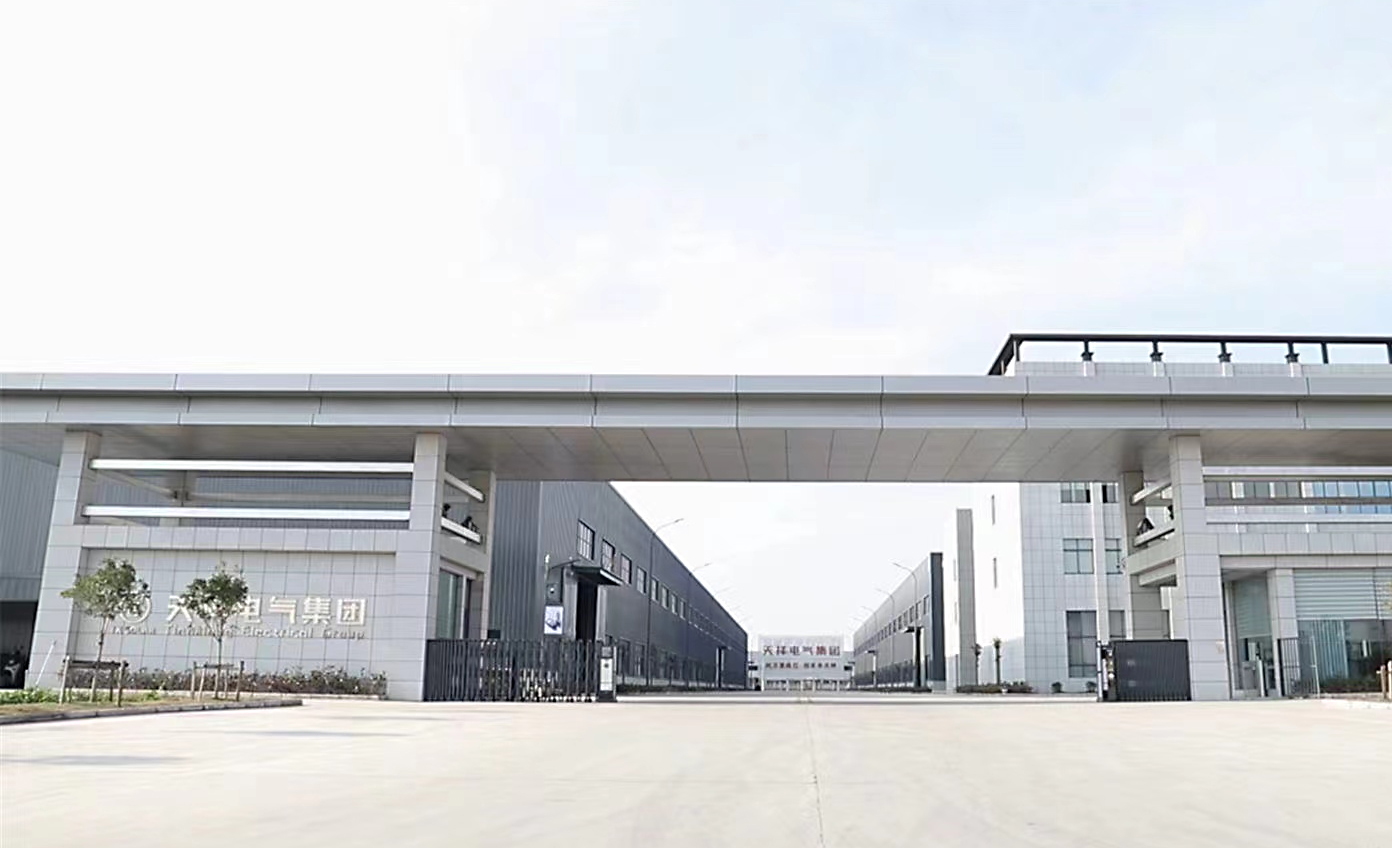
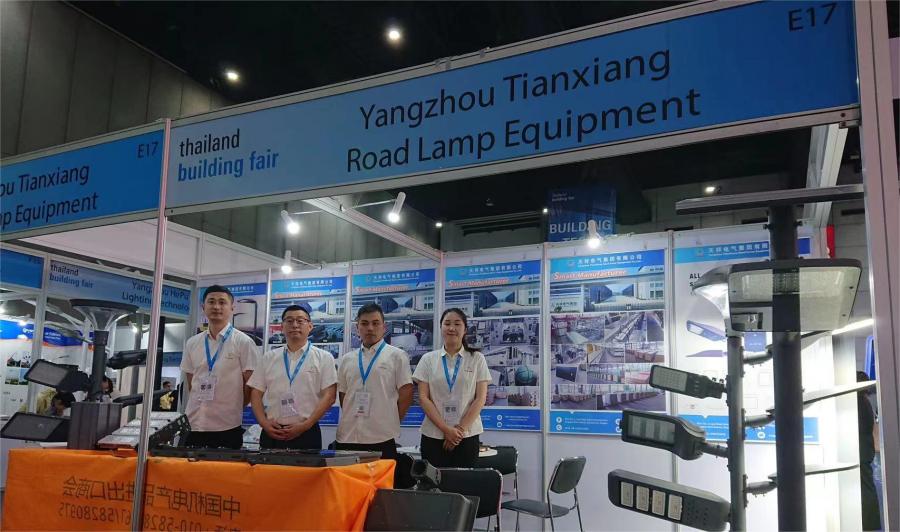
Yangzhou Tianxiang Road Lamp Equipment Co., Ltd. founded in 2008 and located in the smart Industrial Park of street lamp manufacturing base in Gaoyou City, Jiangsu Province, is a production-oriented enterprise focusing on street lamp manufacturing. At present, it has the most perfect and advanced digital production line in the industry.
Up to now, the factory has been at the forefront of the industry in terms of production capacity, price, quality control, qualification and other competitiveness, with a cumulative number of lights on more than 1,700,000. In Africa, Southeast Asia, South America, and other regions, we occupy a large market share and have become the preferred product supplier for many key projects and engineering companies at home and abroad.
The company was established in 1996, and we joined this new industrial zone in 2008. Now we have more than 200 people, including R&D Personnel of 12 people, 16 experienced engineers, 4 dedicated QC specialists, an International Trade Department of 16 people, and a domestic sales department of 12 people.
Our expansive manufacturing footprint includes independent workshops for PV modules, lithium batteries, and custom steel poles. By integrating IoT technology directly into our production processes, we ensure that every smart solar street light leaving our factory is optimized for connection to modern industrial management networks.
How modern manufacturing facilities are utilizing smart solar technology to achieve net-zero carbon goals and reduce operating expenditures.
Industrial parks, logistics hubs, and large-scale manufacturing facilities operate under intense energy demands. Traditional high-pressure sodium (HPS) or legacy LED grid-connected streetlights consume vast amounts of electricity and require costly trenching and cabling. As global industries face stricter carbon neutrality regulations and rising energy costs, the demand for off-grid, self-sustaining lighting systems has surged. This is where the IoT Solar Street Light Factory plays a pivotal role.
Modern industrial parks are no longer just clusters of warehouses; they are turning into smart ecosystems. Integrating IoT (Internet of Things) capabilities with solar street lighting allows facility managers to monitor energy capture, battery health, and light output in real time. Instead of relying on manual inspections, an automated system reports faults instantly, minimizing downtime and securing factory perimeters. With zero grid dependency, these systems ensure uninterrupted illumination even during regional power outages, safeguarding expensive assets and staff.
Financially, the return on investment (ROI) for IoT solar lighting is highly compelling. By eliminating trenching, wiring, and grid connection fees, initial installation costs are slashed by up to 50%. When coupled with smart dimming profiles that adjust brightness based on shift schedules or motion detection, battery life is extended, and maintenance cycles are delayed. For multinational corporations reporting under ESG (Environmental, Social, and Governance) frameworks, adopting IoT solar streetlights directly reduces Scope 2 emissions, showcasing a clear commitment to sustainable operations.
Enables remote control of brightness, battery state of charge (SoC), and diagnostic alerts through NB-IoT, LoRaWAN, or Zigbee networks.
Powered entirely by high-efficiency monocrystalline solar panels, ensuring that your outdoor lighting operates with zero carbon footprint.
System automatically flags degradation in solar modules or batteries, allowing maintenance crews to act before a blackout occurs.
Discover the cutting-edge innovations shaping the future of off-grid industrial illumination.
The landscape of industrial outdoor lighting is changing rapidly. As a leading IoT solar street light factory, Tianxiang is continuously integrating the latest hardware and software to meet the rugged demands of factories worldwide. Below are the key technological pillars driving this transition:
Industrial parks operate under dynamic shifts. Standard solar lights run at fixed brightness, which wastes energy during quiet hours. IoT-enabled lights employ adaptive dimming profiles. For example, during shift changes (e.g., 6:00 PM to 8:00 PM and 5:00 AM to 7:00 AM), the lights run at 100% brightness. During midnight hours when only security patrols are active, the lights automatically dim to 30%, instantly ramping up to 100% when microwave or PIR motion sensors detect movement.
Industrial settings expose equipment to extreme temperatures and vibration. Our factory utilizes advanced Gel and LiFePO4 (Lithium Iron Phosphate) batteries equipped with intelligent BMS. The BMS controls thermal regulation, overcharge protection, and deep discharge prevention. This ensures a lifespan of over 10 years, even in hot Middle Eastern climates or freezing northern regions.
Lighting infrastructure in industrial zones must withstand harsh chemical exposure, dust, and strong winds. Our poles are fabricated from Q235 steel and undergo a hot-dip galvanization process that complies with international standards. This provides a rust-free life expectancy of over 30 years, protecting the sensitive IoT transmitters and solar hardware mounted aloft.
Tailoring smart solar lighting solutions to specific operational zones within factory layouts.
Operational Challenge: Logistics hubs operate 24/7 with constant truck movement. Poor lighting leads to accidents, loading errors, and security breaches, while continuous high illumination consumes excessive energy.
IoT Solar Solution: Installing high-output 80W to 120W IoT solar street lights with customized brackets. These units communicate with the central logistics management software. When a truck is scheduled to arrive at a specific bay, the local lights brighten to maximum capacity, reverting to standby dim mode once the bay is clear.
Operational Challenge: Large industrial parks cover massive areas, making perimeter security a major concern. Running power cables to remote fence lines is economically unviable.
IoT Solar Solution: 8M smart poles equipped with integrated CCTV cameras, motion sensors, and 60W solar-powered luminaires. The solar system powers both the light and the camera. In case of an intrusion, the IoT sensor triggers a flashing warning light and transmits real-time footage to the factory security office.
Operational Challenge: Internal roadways carry heavy machinery, forklifts, and pedestrian traffic. Glare or uneven lighting spots pose serious safety hazards.
IoT Solar Solution: Precision-engineered 10M Q235 galvanized steel poles paired with bat-wing light distribution lenses. The IoT system monitors dust accumulation on the solar panel, alerting maintenance crews to clean the panels and maintain optimal charging efficiency in dusty manufacturing zones.
Operational Challenge: Sparking hazards from electrical conduits in chemical storage yards pose severe explosion risks.
IoT Solar Solution: Completely off-grid, low-voltage DC solar lighting systems. By eliminating high-voltage AC cabling underground, the risk of electrical short-circuits is mitigated. The IoT controller monitors internal battery temperatures to prevent overheating in volatile environments.
Our commitment to quality, innovation, and global client satisfaction drives our daily operations.


Tracing our growth from a local pole fabricator to an international smart lighting pioneer.
Explore our full line of IoT solar street lights, workshop high bays, and heavy-duty galvanized poles designed for industrial applications.